

Best Cable TV Alternative in 2026
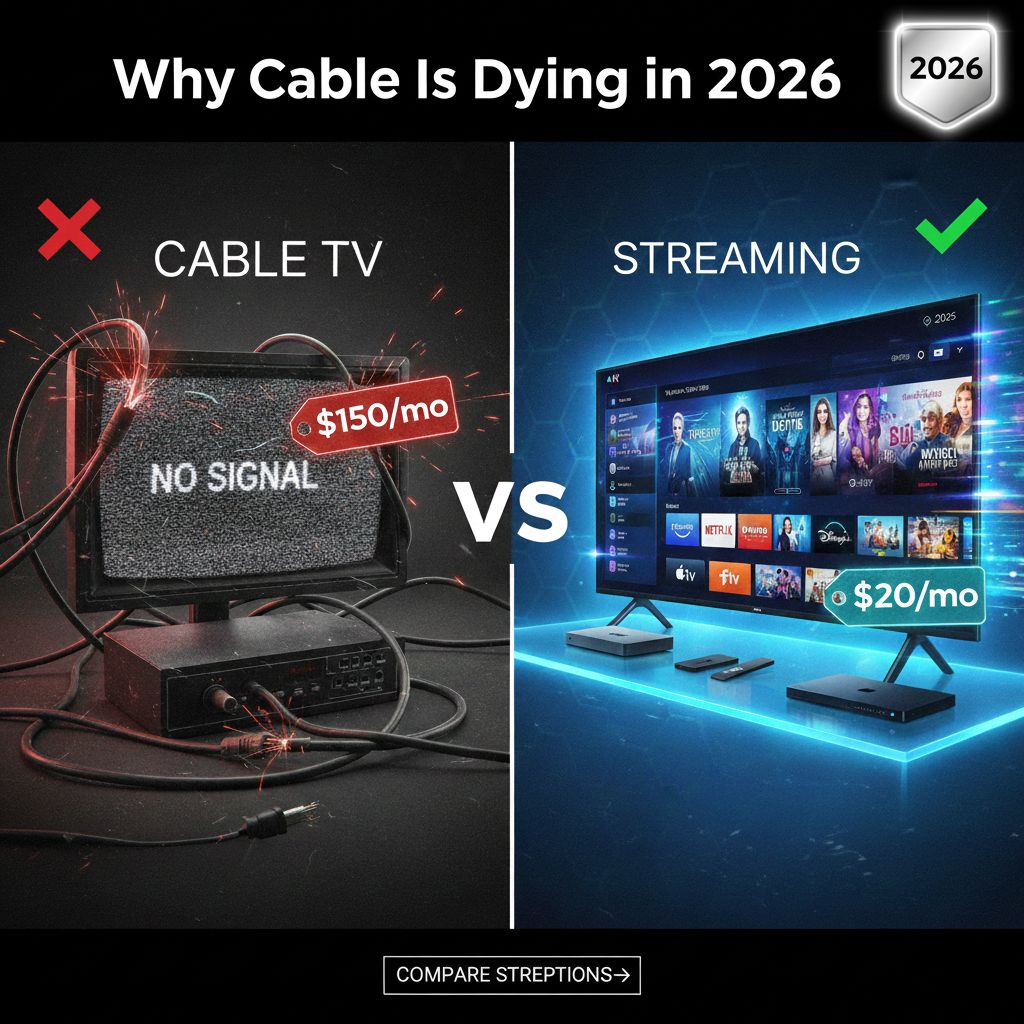
Why Cable TV Is Declining in 2026 and Why More Households Are Switching to Streaming IPTV
Cable television is experiencing a major decline in 2026 as millions of households worldwide shift to flexible, internet-based TV platforms. Viewers today expect affordable pricing, instant access, and the freedom to watch on any device. Streaming delivers all of this, while traditional cable struggles with rising costs, outdated equipment, and limited control for users. This global shift continues to accelerate every year, making streaming the preferred way to enjoy live TV and entertainment.
The Rising Cost of Traditional Cable Subscriptions
Across many regions, the price of cable TV has reached its highest levels to date. Monthly costs keep increasing even though most viewers only watch a few channels from large, expensive bundles. Cable subscriptions force customers to pay for dozens of networks they never use, creating poor value for money.
Streaming platforms solve this problem by offering a much more affordable alternative. With flexible monthly plans, no installation fees, and no equipment rentals, online TV services allow viewers to enjoy live channels, movies, and series at a fraction of the cost. This dramatic price difference is one of the primary reasons cable continues to lose subscribers globally in 2026.
Contract Limitations, Fees, and Outdated Hardware
Traditional cable still depends on long-term contracts, cancellation penalties, and additional fees for HD, DVR storage, or extra rooms. Most cable setups require bulky hardware boxes that are slow, outdated, and often need maintenance or replacement. All of this adds complexity, cost, and inconvenience.
Streaming eliminates these limitations entirely. With a simple app on a Smart TV, phone, tablet, or streaming device, users can start watching instantly. No contracts, no hidden fees, no technician visits, and no hardware clutter. This simplicity and flexibility make streaming the preferred choice for modern viewers who want a smooth, on-demand experience.
The Impact of 4K Streaming and Internet-Based TV
The rise of 4K streaming has transformed the quality expectations of viewers around the world. Most cable channels still broadcast in older resolutions, while modern streaming platforms deliver clear and immersive 4K Ultra HD picture quality with improved color, depth, and motion.
As global internet speeds continue to rise, streaming high-quality live TV has become more stable and more accessible. Internet-based platforms can update features instantly, while cable systems depend on slow hardware cycles. For anyone with a modern television, the difference in clarity is obvious, making streaming the preferred technology for premium viewing in 2026.
The Shift in Viewer Behavior Toward Flexible Entertainment
Today’s viewers want entertainment that adapts to their lifestyle—not rigid broadcast schedules. Streaming completely changed how people watch TV by offering instant playback, on-demand libraries, and seamless switching between devices such as Smart TVs, laptops, tablets, and phones.
Whether at home or on the go, users can access live TV, movies, and series at any time without being tied to a single room or cable box. This freedom has become a key reason millions worldwide have moved away from traditional cable. The growth of mobile viewing, cloud-based libraries, and personalized recommendations continues to accelerate this global trend in 2026.
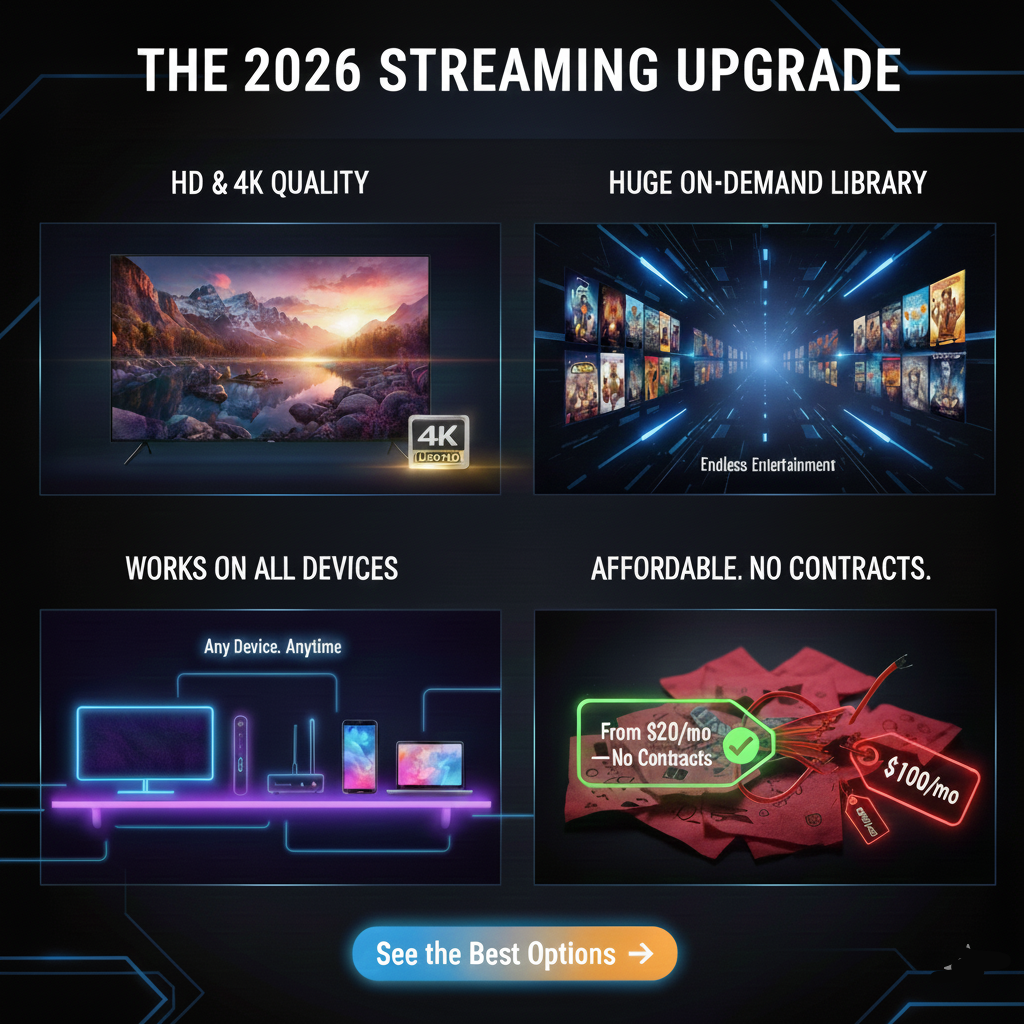
What Defines a Great Cable TV Alternative in 2026? Key Features to Look For
A great cable TV alternative in 2026 must deliver high-quality live channels, strong performance, and full viewing flexibility. Users today expect affordable pricing, instant access, and seamless support across multiple devices. The features below represent the core elements that define a modern, reliable, and high-value streaming solution — and what separates the best online TV platforms from traditional cable systems.
Access to Live Channels in Full HD and 4K Quality
The best cable TV alternatives provide live channels in Full HD and 4K Ultra HD, giving viewers sharper detail, richer color, and smoother motion. With most households now using Smart TVs and faster internet connections, HD and 4K support has become a basic expectation. Platforms that offer stable, high-resolution streams deliver a significantly better viewing experience than cable broadcasts, which often rely on older and lower-quality formats.
A Large Library of Movies, Series, and On-Demand Content
A strong streaming service should include a large and diverse on-demand library alongside its live TV channels. This means access to thousands of movies, series, documentaries, kids’ programs, replays, and exclusive content available anytime. On-demand viewing is one of the biggest advantages over traditional cable, giving users the freedom to watch what they want without waiting for scheduled broadcast times.
Compatibility with Smart TVs, Firestick, Android, and Apple Devices
A reliable cable alternative must work smoothly across all major devices. Whether on a Smart TV, Amazon Firestick, Android box, smartphone, or Apple device, users should be able to stream instantly without depending on bulky cable hardware. Wide device compatibility ensures viewers can switch between screens easily, both at home and on the go, creating a seamless and flexible entertainment experience.
Affordable Monthly Plans with No Long-Term Contracts
One of the main reasons people leave cable is the high cost and strict long-term commitments. A top-tier streaming service offers transparent, affordable monthly plans with no contracts, no penalties, and no hidden fees. This gives users complete freedom to start, pause, or cancel their service at any time — something traditional cable providers rarely offer.
Reliability, Stability, and Minimal Buffering
Performance remains one of the most important factors for viewers. A high-quality streaming platform must deliver smooth, consistent playback with minimal buffering, fast channel switching, and stable servers. In 2026, users expect services to handle HD and 4K streams without interruptions. Platforms that invest in strong server networks and optimized infrastructure provide a cleaner, more reliable experience than aging cable TV systems.
The Top Cable TV Alternatives in 2026: Detailed Comparison of the Leading Services
As cable TV continues to decline in 2026, more households are switching to modern IPTV platforms that offer greater flexibility, improved picture quality, and lower monthly costs. While the streaming market is full of choices, two services stand out for providing reliable, high-value alternatives to traditional cable: UHF IPTV and IPTV Royale. Both platforms deliver strong performance, broad device compatibility, and extensive content libraries, making them excellent replacements for outdated cable packages.
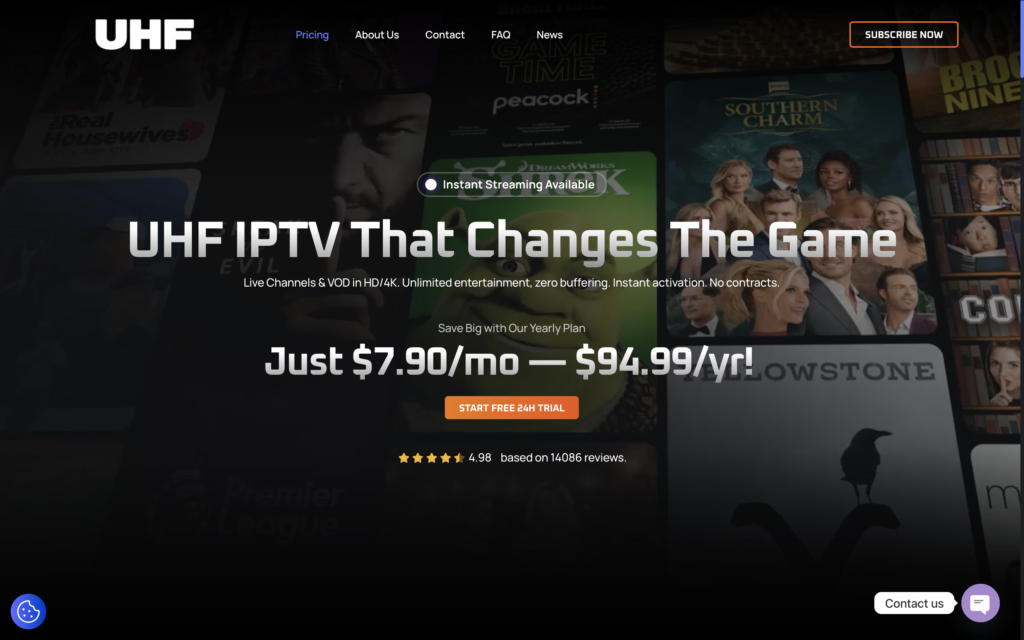
UHF IPTV: A Complete, Affordable, and All-In-One Cable Replacement
UHF IPTV offers one of the most comprehensive IPTV experiences available today. It includes a large selection of live channels from multiple regions, covering entertainment, news, lifestyle, movies, sports, and international programming. Alongside live TV, users have access to a substantial on-demand library featuring movies, series, and replays available anytime.
Key advantages include:
- Works smoothly on Smart TVs, Firestick, Android, and many other devices
- Affordable monthly plans with no contracts or long-term commitments
- Stable streaming quality with minimal buffering
- Extensive content variety suitable for households with diverse viewing habits
UHF IPTV is ideal for viewers who want a cost-effective, all-in-one streaming solution that replicates the full cable experience at a significantly lower price.
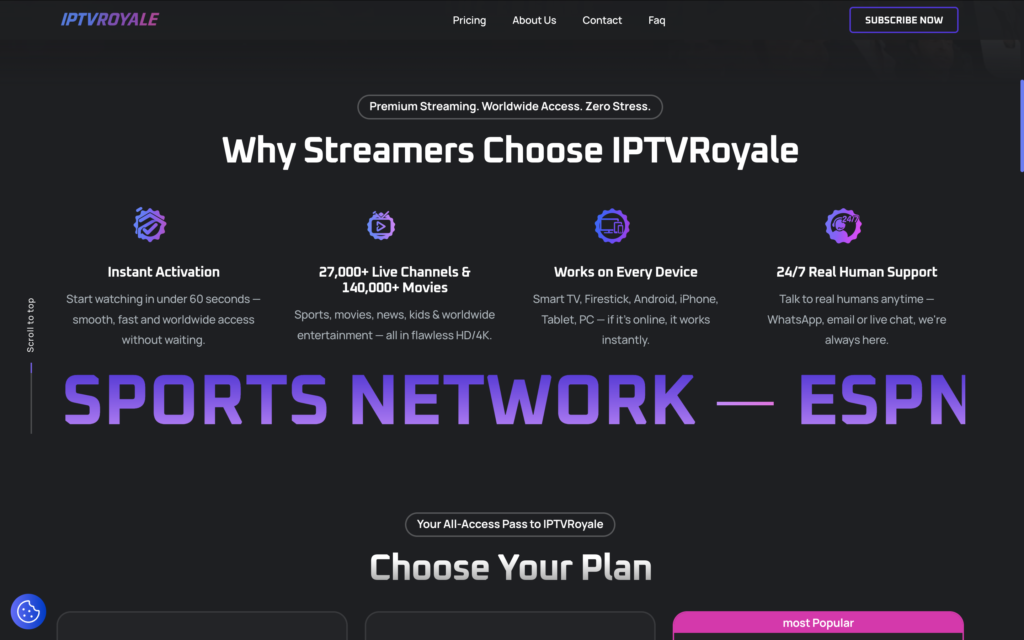
IPTV Royale: A Premium IPTV Experience with High Stability and Global Coverage
IPTV Royale focuses on delivering a premium-level IPTV experience with consistent performance, smooth playback, and a wide international channel lineup. It offers live TV channels in HD and 4K quality, a strong on-demand library, and optimized server infrastructure designed for stable, uninterrupted viewing across all major devices.
Key advantages include:
- High-stability servers engineered for consistent HD and 4K playback
- Broad global channel coverage across entertainment, sports, and movies
- Simple, user-friendly interface suitable for beginners and experienced users
- Flexible subscriptions that allow viewers to start, pause, or cancel at any time
IPTV Royale is an excellent choice for households looking for a polished, easy-to-use IPTV platform with strong global accessibility.
Which Service Is Better in 2026?
Both platforms offer outstanding value, and the best choice depends on what the viewer prioritizes:
- Choose UHF IPTV if you want a very affordable all-in-one solution with a massive content variety and broad device support.
- Choose IPTV Royale if you prefer a premium viewing experience with highly stable HD/4K streaming and a streamlined interface.
Either option provides a far more flexible and cost-efficient alternative to traditional cable TV in 2026.
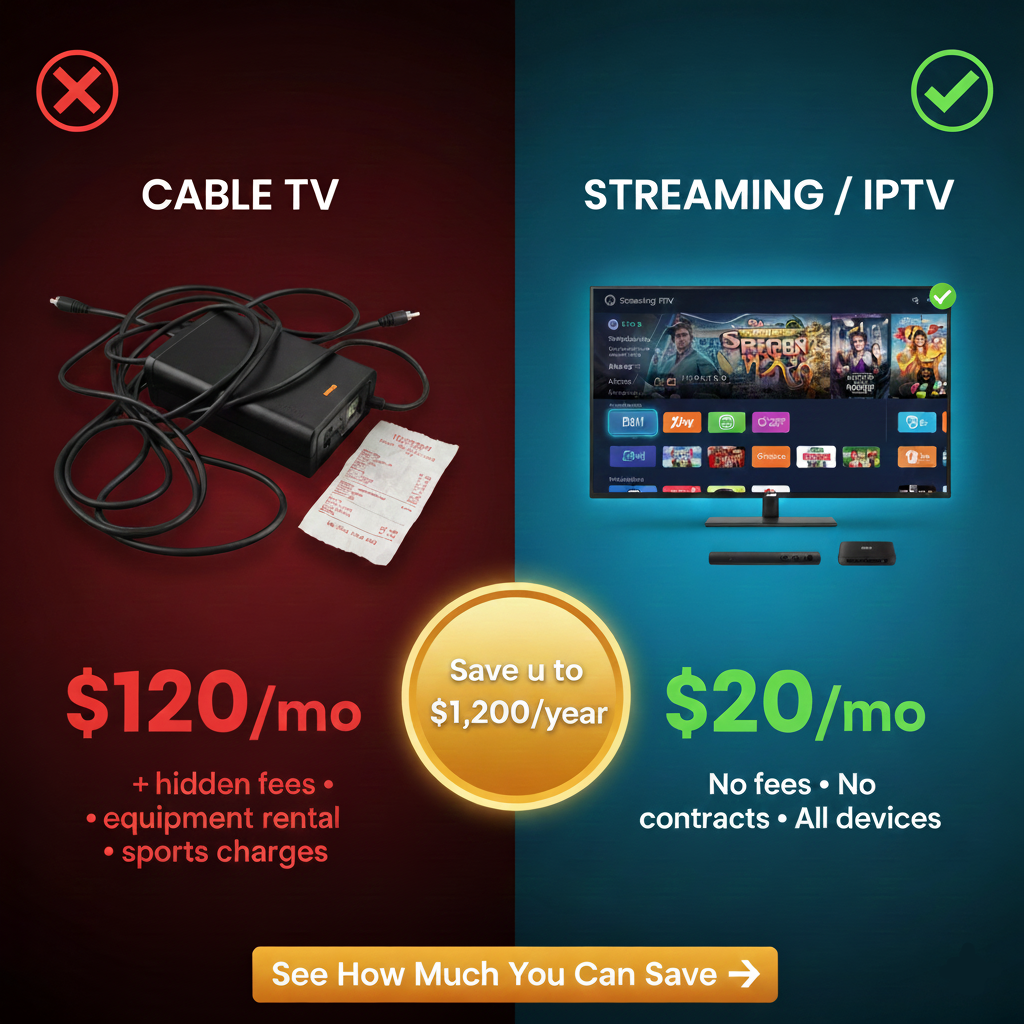
How Much Money You Can Save in 2026 by Switching From Cable to Streaming
Switching from cable to streaming in 2026 is one of the easiest ways for households to cut monthly expenses without losing access to live TV, sports, movies, and entertainment. With cable prices rising year after year, millions of viewers are discovering that modern streaming services deliver equal — and often better — value at a much lower cost. Below is a clear, realistic breakdown of how much the average household can save in 2026.
Average Cost of Cable TV vs. Streaming Subscriptions
In 2026, the average cable subscription in many countries ranges between $90 and $150 per month, depending on the provider, region, and channel package. This usually covers only basic channels and often requires additional fees for HD content, sports packages, DVR access, or premium networks.
Streaming services remain significantly more affordable. IPTV platforms and hybrid streaming bundles typically cost $10 to $35 per month, depending on the features, channel variety, and device support.
Typical monthly cost comparison:
- Cable TV: $90–$150+ per month
- Streaming / IPTV: $10–$35 per month
Even at the lowest cable tier, traditional TV remains one of the most expensive monthly utilities in 2026 — often costing more than home internet, electricity, and mobile service combined.
Realistic Yearly Savings Based on 2026 Pricing
Once you compare the numbers side by side, the savings are massive.
Switching from cable ($120 monthly average) to a streaming service ($20 monthly average) can result in:
- Monthly savings: ~$100
- Annual savings: ~$1,200
- Five-year savings: ~$6,000
For households that pay for extra cable boxes, sports add-ons, HD upgrades, and DVR features, the savings can be even larger.
Many families in 2026 report saving $1,500 to $2,000 annually simply by replacing cable with a modern streaming plan.
Hidden Cable Fees and Equipment Charges You Avoid
Cable bills often include fees that significantly inflate the advertised price. These hidden charges commonly include:
- Set-top box rental fees (per device)
- DVR or cloud-recording surcharges
- HD or 4K access fees
- Regional sports fees
- Broadcast and network surcharges
- Installation or activation fees
- Early-termination penalties
By switching to streaming, viewers avoid almost all of these charges. Most IPTV and app-based platforms require no rented equipment, no installation, and no hardware upgrades. You simply use your Smart TV, Firestick, phone, or tablet — instantly reducing overall monthly costs.
Long-Term Financial Benefits for Families and Students
For families, students, and anyone looking to manage rising living costs, streaming offers long-term financial advantages:
- Lower monthly bills with predictable pricing
- No contracts, giving viewers total flexibility
- More content value, combining live TV, sports, and on-demand in a single plan
- Scalable options, allowing users to upgrade or pause anytime
- No equipment maintenance or returns
Students especially benefit from low-cost streaming plans that work on laptops and mobile devices — eliminating the need for expensive cable installations in dorms or apartments.
Households with multiple devices save even more, since one streaming subscription can usually be used across several screens at once.
The Best Devices to Use for Live TV Streaming in 2026
Choosing the right streaming device is one of the most important steps to getting a smooth, stable, and enjoyable live TV experience in 2026. Whether you prefer watching on a large TV, a tablet, or while traveling, today’s streaming hardware delivers fast performance, HD and 4K support, and simple setup. Below is a clear breakdown of the most popular and reliable devices for live TV this year.
Amazon Fire TV Stick: The Most Popular Streaming Device Worldwide
The Amazon Fire TV Stick continues to lead the global streaming market in 2026 thanks to its low price, simple setup, and excellent app compatibility. It works seamlessly with most IPTV apps, supports stable HD and 4K playback, and can be installed on any TV with an HDMI port in just a few minutes.
Key advantages:
- Very easy setup for beginners
- Excellent support for live TV and IPTV apps
- Strong performance on Fire Stick 4K and 4K Max models
- Affordable and accessible for nearly all households
For users who want a quick and dependable solution without buying a new TV, the Fire Stick remains one of the best choices on the market.
Android TV Boxes: Versatile, Powerful, and Affordable
Android TV boxes are perfect for viewers who want more custom options, stronger hardware, and broader app support. In 2026, devices powered by Android TV or Google TV offer fast navigation, smooth 4K streaming, and near-universal app compatibility.
Top benefits:
- Supports nearly all IPTV and streaming apps
- Better processing power than most streaming sticks
- Easy to expand storage for apps and media
- Ideal for large households, heavy users, and tech-savvy viewers
From certified Google TV boxes to budget alternatives, Android boxes provide excellent flexibility and long-term performance.
Apple TV 4K: Premium Quality for Apple Ecosystem Users
Apple TV 4K remains the top premium device for streaming in 2026. It offers outstanding picture quality, smooth navigation, and tight integration with iPhones, iPads, and the entire Apple ecosystem.
What makes it stand out:
- Ultra-fast processing for 4K HDR streaming
- Highly stable, polished, and responsive user experience
- Perfect for users heavily invested in Apple products
- Strong privacy, security, and long-term software support
Although more expensive, Apple TV 4K delivers a premium experience for viewers who want the highest picture quality and smoothest performance.
Samsung, LG, and Other Smart TVs With Built-In App Support
Modern Smart TVs — including models from Samsung, LG, Sony, and TCL — come with built-in app stores that allow users to stream live TV without additional devices. These TVs have powerful processors and strong Wi-Fi performance, making streaming simple and efficient.
Advantages:
- No extra hardware required
- Built-in compatibility with major streaming apps
- Clean, cable-free setup
- Ideal for users who want maximum convenience
Smart TVs are perfect for viewers who prefer a minimalist entertainment setup: just open the app and start watching instantly.
Mobile and Tablet Viewing for Full Portability
Streaming on mobile devices has become more popular than ever. Most IPTV and live TV apps work flawlessly on iOS and Android, giving users the freedom to watch from virtually anywhere with an internet connection.
Benefits:
- Full portability and mobility
- Great for commuting, travel, and shared households
- Works on Wi-Fi and mobile data
- Perfect for students and viewers who watch on the go
Mobile and tablet streaming offers unmatched flexibility and privacy for people who want entertainment wherever they are.
Frequently Asked Questions About Switching From Cable to Streaming (2026 Edition)
As more households move away from cable, many viewers in 2026 still have questions about streaming, internet speed, sports access, and device compatibility. Below are the clearest and most helpful answers, optimized for quick reading and search relevance.
1. What is the best alternative to cable TV in 2026?
The strongest cable replacements in 2026 are modern IPTV services like UHF IPTV and IPTV Royale. They offer:
- Large live channel libraries
- HD and 4K quality
- Support for all major devices
- Low monthly pricing
- No contracts or hidden fees
For most households, IPTV delivers the best mix of content variety, flexibility, and long-term savings.
2. Can I watch sports like NHL, NFL, or soccer without cable?
Yes. In 2026, you can stream almost every major sports league, including:
- NHL, NFL, NBA
- Premier League, Champions League, La Liga
- UFC and Formula 1
IPTV platforms include dedicated sports channels, eliminating the need for cable to watch live games.
3. Do I need fast internet to stream in 4K?
To stream in 4K reliably, you should have:
- Minimum: 25 Mbps
- Recommended: 50 Mbps+ for households with multiple users
If your speed drops, apps automatically switch to HD, which still delivers excellent quality.
4. Does streaming work on older TVs?
Yes. Any TV with an HDMI port can stream live content using devices like:
- Amazon Fire Stick
- Android TV box
- Roku
- Apple TV 4K
These devices instantly upgrade older televisions into full streaming-capable Smart TVs.
5. Is streaming cheaper than cable long-term?
Absolutely. Traditional cable costs $90–$150+ per month, while streaming typically ranges $10–$35 per month.
Streaming also removes:
- Equipment rental fees
- Installation charges
- Broadcast and sports fees
- Long-term commitments
Most households save $1,200–$2,000+ per year after switching.
How difficult is it to switch from cable to streaming?
Switching is extremely simple — usually under 10 minutes:
- Plug in a streaming device
- Connect it to Wi-Fi
- Install your IPTV or streaming app
- Log in and start watching
No technician visits, cable boxes, or complicated setup required.
Final Verdict: Why Streaming Has Become the Better Choice Than Cable TV in 2026
Streaming fully overtakes cable in 2026, offering lower prices, more flexibility, and a far better viewing experience. With cable bills rising and channels becoming more limited, most households now choose streaming as the smarter and more affordable option.
Summary of the Key Advantages
Switching to streaming delivers immediate benefits:
- Much lower monthly cost than cable
- HD and 4K included with no extra fees
- Works on all devices — Smart TVs, Fire Stick, Android, Apple TV, mobile
- No equipment rentals or hidden charges
- Live TV + movies + series in one app
- No contracts, no installation, no technicians
These advantages make streaming the superior choice for almost every viewer in 2026.
Why the Switch Makes Sense for Most Households
Streaming is easier, cheaper, and more flexible:
- Save $1,200–$2,000+ per year
- Watch on any screen — TV, laptop, tablet, phone
- Setup takes under 10 minutes
- Access to more sports, movies, and international channels
- Upgrade, pause, or cancel whenever you want
Streaming gives households more content, more control, and zero hassle.
Why UHF IPTV Is the Standout Option for 2026
UHF IPTV stands out as one of the strongest cable alternatives thanks to:
- A massive global live channel lineup
- Stable HD and 4K streaming
- Full compatibility with Smart TVs, Fire Stick, Android & Apple TV
- Affordable plans with no long-term commitments
- Fast, reliable servers with minimal buffering
For anyone needing a complete, high-value cable replacement, UHF IPTV offers one of the best all-around streaming experiences in 2026.